Aug 18, 2026 / Warehousing
5 Warehouse Storage Mistakes That Are Quietly Costing Your Business
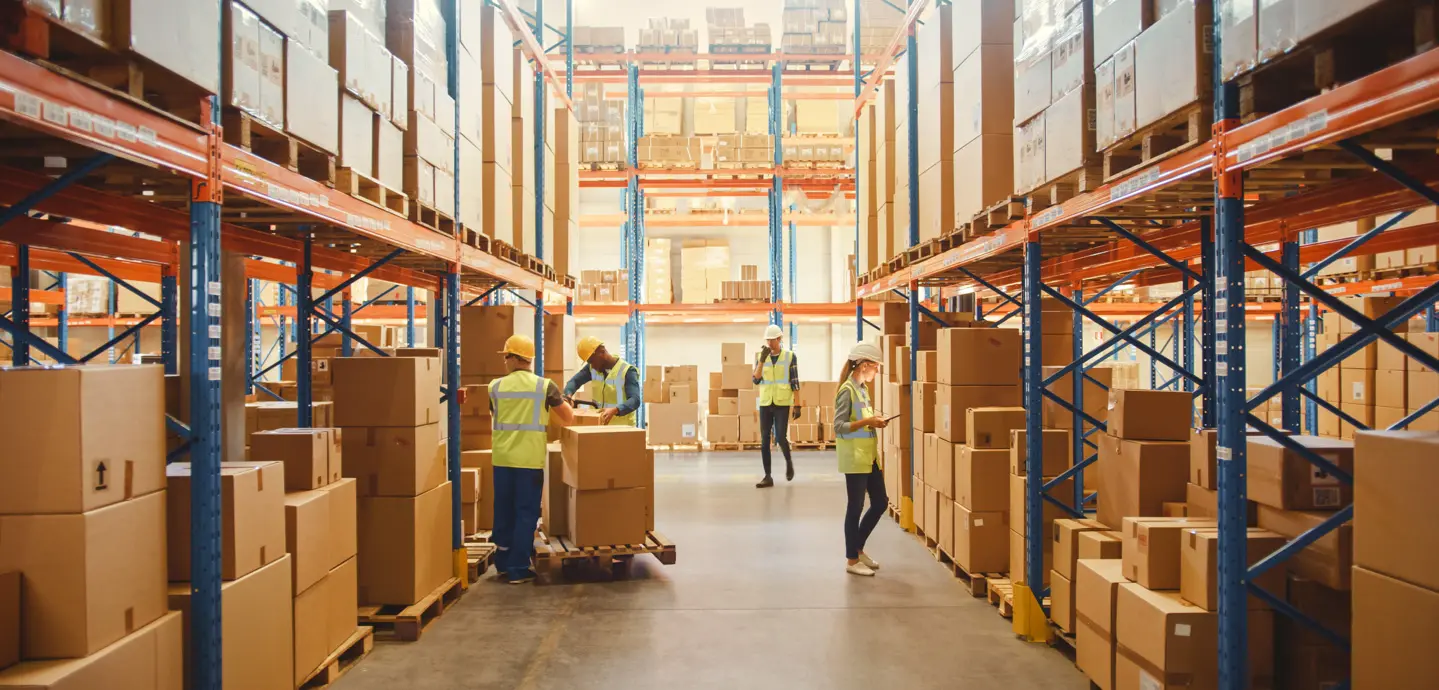
Most warehouse inefficiency doesn't announce itself. It shows up gradually, in an extra thirty seconds per pick, a pallet stored in the wrong zone, a reorder placed a week too late. Individually these look like rounding errors. Multiplied across a year of operations, they're often the difference between a warehouse that scales with your business and one that quietly caps how fast you can grow.
After managing storage and fulfillment for shippers across a wide range of industries, we keep seeing the same handful of mistakes resurface — regardless of facility size. Here are the five that cost the most, and what to do about each one.
1. Slotting by convenience, not velocity
The most common layout mistake is storing SKUs wherever there happens to be space, rather than by how often they move. Fast-moving items end up buried in the back of the facility while rarely-picked stock sits closest to the dock. Re-slotting your top 20% of SKUs — the ones responsible for the majority of your order volume — into your most accessible locations is usually the single highest-return change a warehouse can make.
2. No real cycle counting cadence
Annual physical inventories catch discrepancies far too late to act on them. By the time a full count reveals a shortage, it may have been silently causing stockouts or overselling for months. A rolling cycle count program — counting a portion of your inventory continuously throughout the year — surfaces problems while they're still small and cheap to fix.
“The warehouses that scale well aren't the ones with the fewest problems. They're the ones that find problems the fastest.”
3. Treating overflow storage as a permanent fix
Overflow space is meant to absorb seasonal spikes, not to become a permanent extension of your primary storage. When overflow becomes routine, it usually means your core facility has outgrown its footprint or your inventory mix has shifted — and it's worth revisiting your network rather than continuing to pay for stopgap space indefinitely.
4. Underestimating the cost of damaged inventory
Damage rarely gets tracked as its own line item, so it's easy to underestimate. Poor racking discipline, overstacking, and rushed putaway are the usual culprits. Facilities that log damage by cause — not just by dollar amount — are able to fix the actual root cause instead of writing off the loss and moving on.
5. No single source of truth for inventory data
When your warehouse management system, your e-commerce platform, and your spreadsheets all show slightly different numbers, every team ends up making decisions on stale or conflicting data. Consolidating visibility into one system — even a simple one — pays for itself the first time it prevents a stockout or a duplicate order.
None of these fixes require a facility overhaul. They require paying attention to the details that are easy to ignore when things are merely working, rather than waiting until they break. If your storage costs have been climbing faster than your order volume, there's a good chance one of these five is the reason.